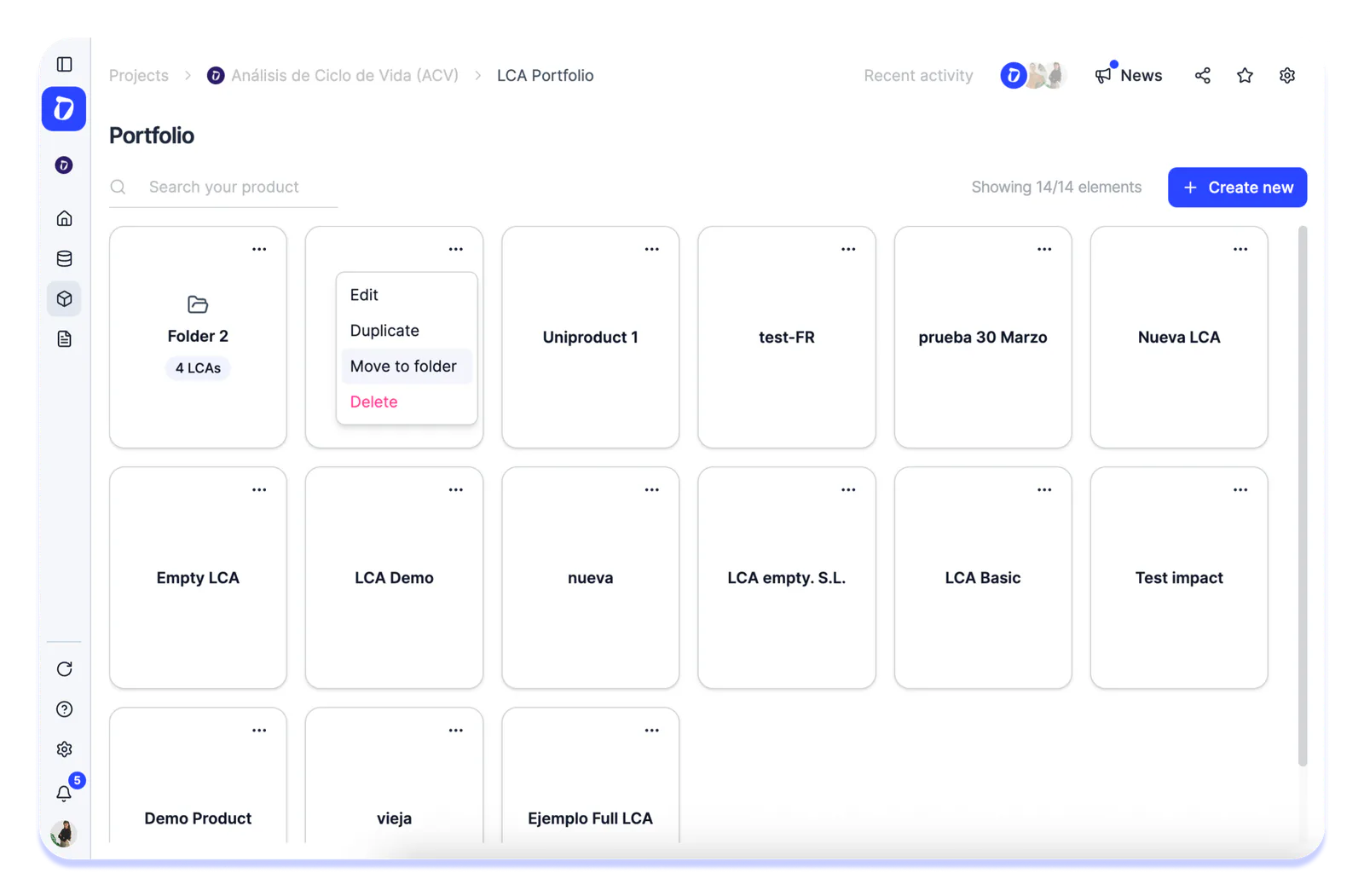


Your company already generates the product data an ISO 14040 life cycle assessment needs: materials, energy, transport, production losses, packaging and end-of-life assumptions. The challenge is that these records sit across procurement, operations, product and finance, then get rebuilt for each study, customer request or report.
Structuring lifecycle data once makes it useful for design decisions, resource savings, supplier conversations, audits and regulatory outputs. ISO 14040 provides the method for turning that shared environmental dataset into a consistent assessment.
What Is ISO 14040?
ISO 14040 provides the international framework for conducting Life Cycle Assessments (LCA). It establishes guidelines for measuring the environmental impact of products throughout their entire lifecycle, from raw material extraction through manufacturing, logistics, usage, and final disposal. The standard serves as the foundation for effective environmental management systems, with LCA as the practical tool for identifying where impacts occur.
Why LCA Implementation Matters
Continuous Improvement and Compliance
Measurement enables optimization of high-cost, high-risk areas within the product lifecycle. Companies implementing LCA under ISO 14040 gain regulatory advantages, improved market access, and stronger competitive positioning. The analysis supports ESG strategy integration and helps organizations meet evolving environmental regulations including the CSRD and EU Taxonomy.
Resource Optimization
Detailed lifecycle assessments help companies optimize material usage, minimize waste, and reduce operational costs. The result is improved sustainability performance alongside better profitability, demonstrating that environmental and financial objectives can align.
Common LCA Methodologies
Several complementary standards support lifecycle analysis:
- ISO 14040: Evaluates environmental impacts across the full product lifecycle with a comprehensive scope.
- ISO 14067: Focuses specifically on greenhouse gas emissions calculation for products and services.
- PAS 2050: Measures the carbon footprint of products and services using a standardized methodology.
Each standard serves a different analytical purpose, and organizations often use multiple methodologies depending on their reporting requirements and stakeholder expectations.
Which life cycle assessment solution is the easiest for a company to adopt?
The easiest solution to adopt is usually one that starts with the data the company already has, provides guided templates and emission-factor libraries, connects to procurement or ERP systems, and lets teams expand from screening to reviewed LCA studies over time. Evaluate implementation effort, supplier-data workflows, method transparency, evidence retention, and whether results can support EPDs, product decisions, customer requests, and corporate reporting. Ease of adoption should include ongoing data maintenance, not only the first calculation.
Key Implementation Challenges
- Technical complexity: LCA can be intricate, particularly when modeling complex supply chains, though digital solutions simplify the process considerably.
- Data collection: Gathering reliable, up-to-date information from across departments and suppliers requires technology support and clear processes.
- Organizational commitment: Successful implementation depends on employee training, awareness building, and leadership support across the organization.
Three Practical Tips for Getting Started
- Define clear sustainability objectives from the outset to guide the scope and focus of your LCA work.
- Train employees and raise organizational awareness so that data providers across departments understand their role in the process.
- Leverage digital solutions to automate data collection, ensure accuracy, and generate actionable reports aligned with frameworks like CSRD and EU Taxonomy.
The Role of Digital Platforms
Modern LCA data platforms automate collection, ensure calculation accuracy and turn the same information into product insights, cost and material decisions, customer evidence and reporting outputs. Dcycle connects lifecycle records with corporate carbon data and supplier evidence so teams can reuse the dataset instead of rebuilding it for each framework or assessment.