



Your whole group, in a single account.

The parent company and its subsidiaries, with their stakes and their facilities. Each company uploads its data and you see the consolidated group, with the approach each report calls for.

3
consolidation approaches
1
Excel file to load data for the whole group
2,000+
companies report with Dcycle
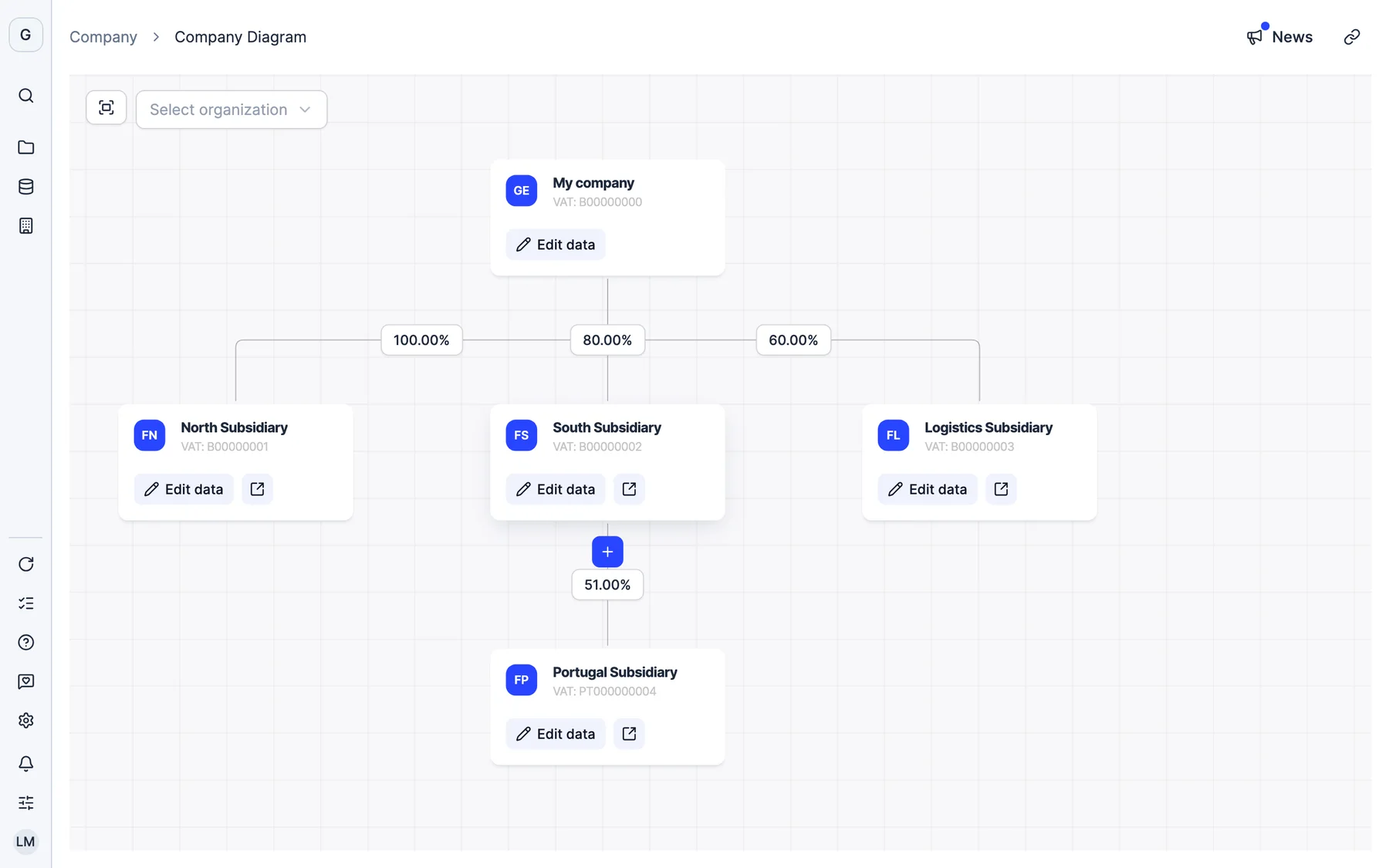
The Dcycle company diagram with the parent company, its subsidiaries and the ownership percentage of each one

More than 2,000 European companies trust Dcycle

ABBAjinomotoEiffageKLNSabadellValeo
Consolidation

Choose the approach. The group total is recalculated.

The GHG Protocol allows three ways to consolidate a group. In Dcycle you choose the approach and which companies go into the report, and emissions are calculated with each one’s stake.

Organizations to consolidate
  • 120 / 120 t
  • 2,400 / 2,400 t
  • 1,800 / 1,800 t
  • 950 / 950 t
  • 600 / 600 t
Approach

100% of each company you control, regardless of the stake.

Group footprint 5,870 t CO₂e
Built for groups

Each company with its own, the group with everything.

The parent company defines the structure and sees the whole. Each subsidiary uploads its data, keeps what is its own and answers for itself.

Inside Dcycle

The group, right in the app.

01Investees

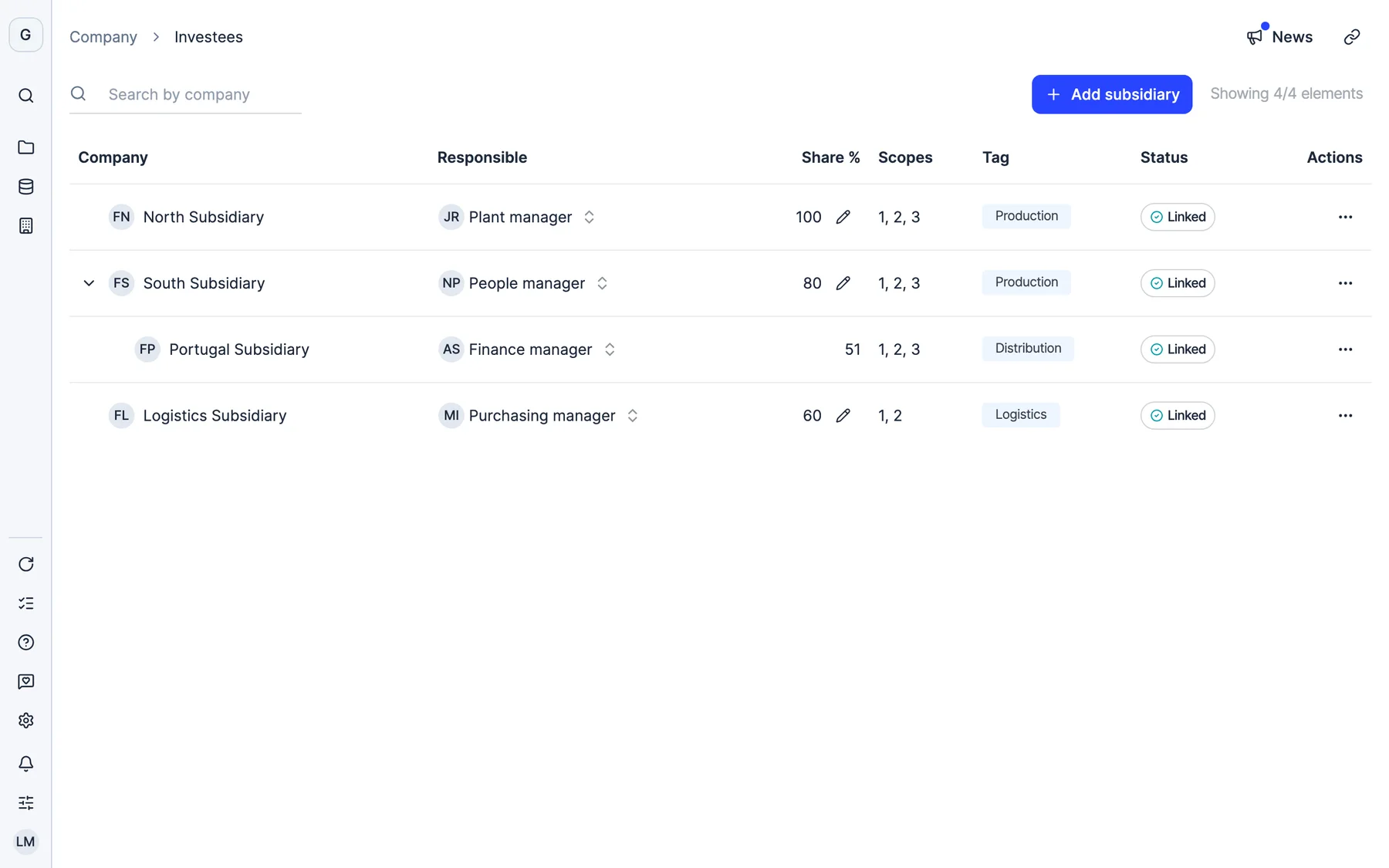
Each subsidiary, with its stake and its owner

The investees table shows each group company with its percentage, the scopes allocated to it, its tag and who is responsible for it. A subsidiary’s own subsidiaries sit under their parent.
02Group reporting

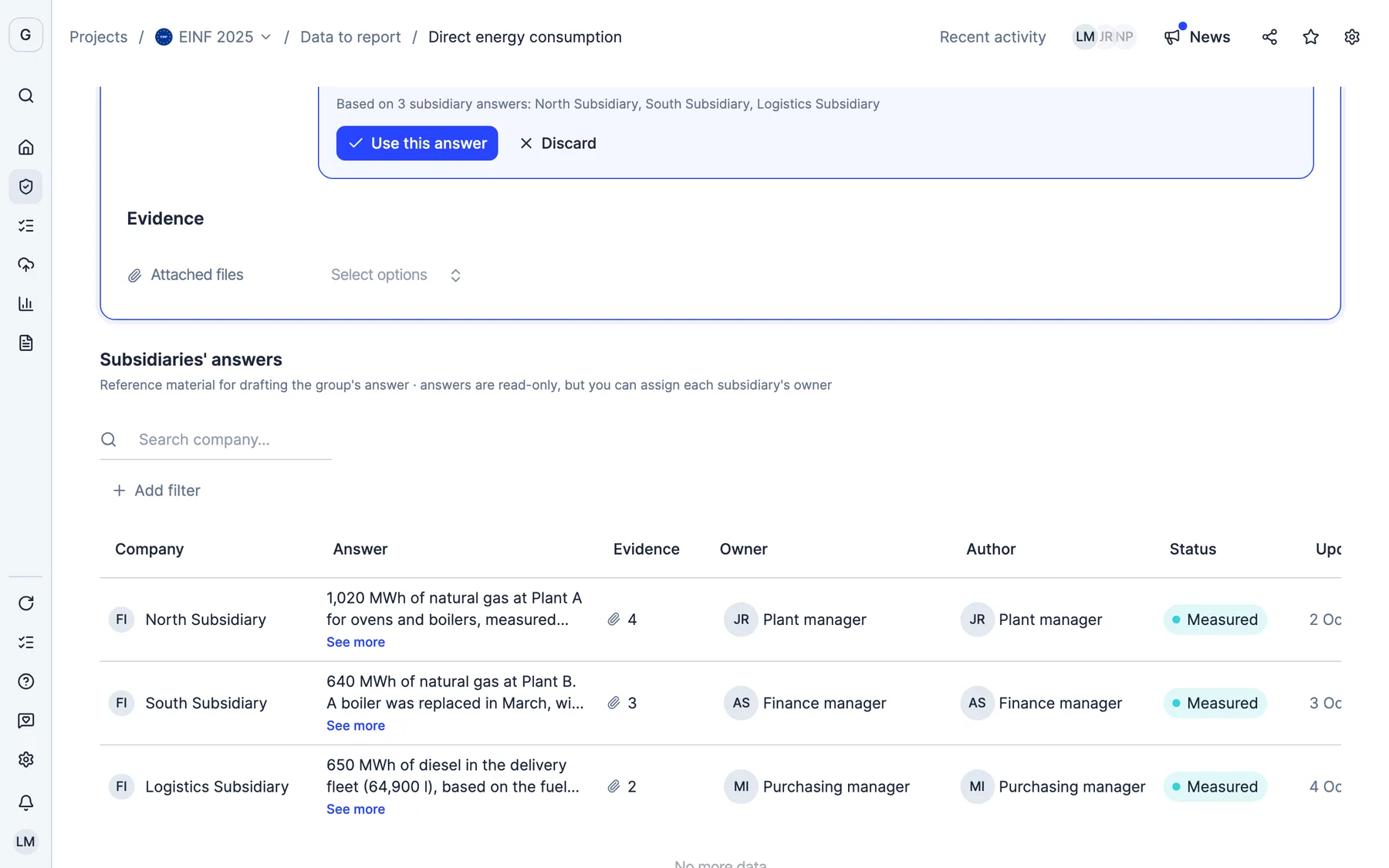
Subsidiaries’ answers, in a single view

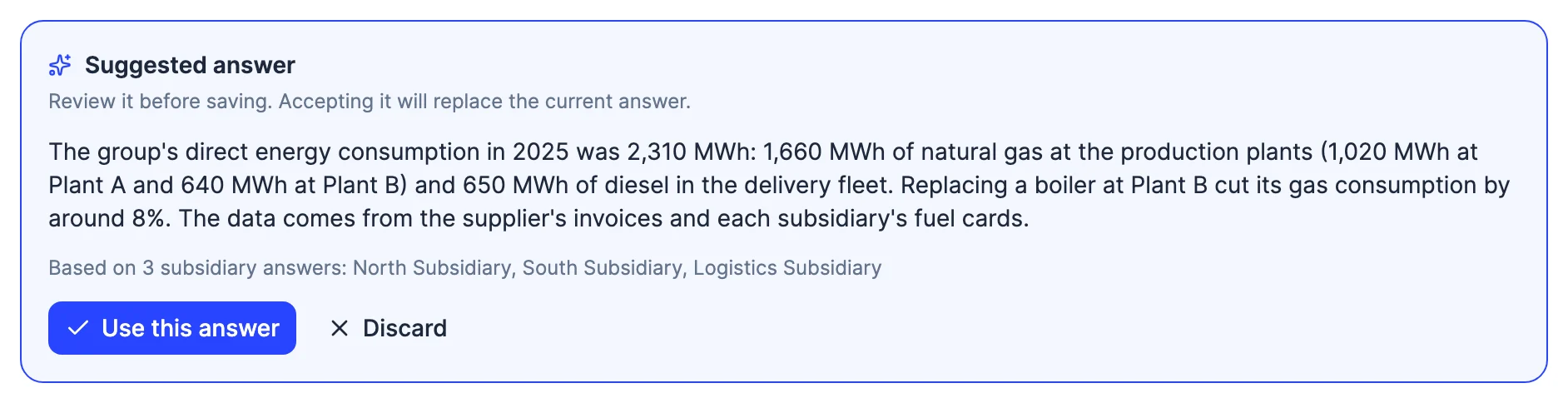
Each subsidiary answers its data point and the parent company sees all the answers together. “Consolidate answers” asks Leia for a group answer you can use or discard.

Each subsidiary, with its stake and its owner
Subsidiaries’ answers, in a single view

Real Dcycle screens with a sample company.

Customer story

Domingo Alonso Group unifies emissions measurement for the whole group on a single platform

Read the story
companies integrated into the platform
+30
corporate sustainability report for the group
1st
FAQ

Frequently asked questions

Can I manage several companies in a group from a single account?

Yes. In Dcycle you add the parent company and its subsidiaries, with each one’s ownership percentage, and you see them in a diagram and in the investees table. A subsidiary’s own subsidiaries sit under their parent company.

Which consolidation approaches does Dcycle support?

The three in the GHG Protocol: operational control, financial control and equity share. When you create the GHG report you choose the approach and which organizations are consolidated, and emissions are calculated with each company’s effective stake.

Does each subsidiary upload its own data?

Yes. Each company works in its own account with its facilities and its data, and the parent company sees the whole. If you prefer, the parent can load data for the whole group in a single Excel file and each row is saved to its company.

Can a subsidiary hide information from the parent company?

Yes. A subsidiary can mark files as private and they are no longer visible to the companies above it. A padlock shows which files are private.

How does CSRD reporting work in a group?

Each subsidiary answers its data points with its evidence and its owner, without overwriting the others. The parent company sees all the answers together and can ask Leia for a consolidated answer for the group report.

Can I see the data grouped by the group structure?

Yes. In visualizations, “Consolidate by organization structure” turns the table into the group tree: each parent includes its subsidiaries and each level is recalculated from the original records.

30-minute demo

See it with your own data.

Thirty minutes with our team. We show you how your data would come in, and what you would get out.

See Dcycle in action
  • No commitment
  • With your data
  • In your language

What your session looks like

  1. 01 You tell us what you’re being asked forCustomers, auditors or banks: what data and by when. 0–5 min
  2. 02 We show how your data comes inInvoices, ERP, suppliers: on an example close to yours. 5–20 min
  3. 03 You leave with a planWhat to automate first and how much time you save. 20–30 min
With someone from the team who then supports you