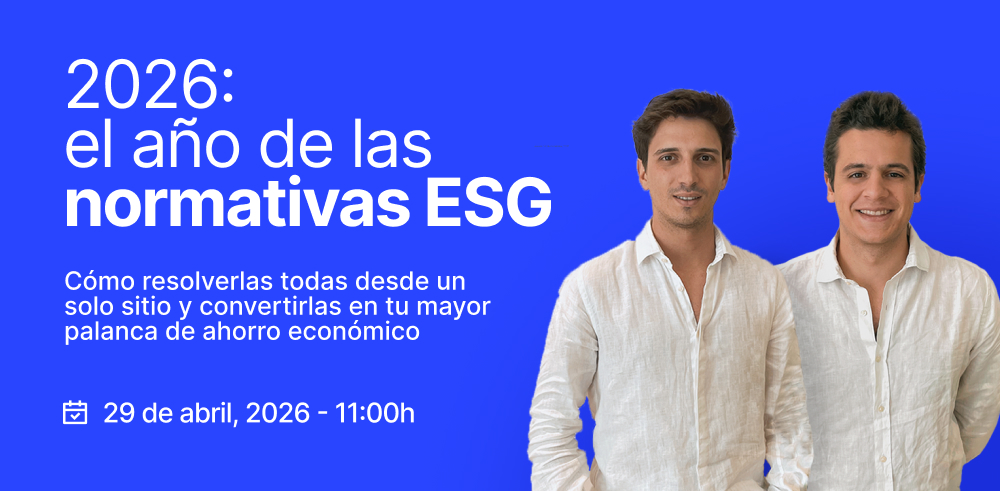
Wednesday, April 29 · 11:00h
Online · Free
2026: the year of ESG regulations
EINF, CSRD, CBAM, EUDR, Taxonomy, mandatory carbon footprint. They all require the same data. Learn how to manage them with AI and extract decisions your CFO cares about.
How to manage them all from one place and turn them into your biggest cost-saving lever
6+ regulations. The same data. One session to connect the dots.
Your team collects emissions data, maps suppliers, calculates taxonomy alignment and fills regulatory templates. That work produces compliance reports that get filed, audited and forgotten. But inside those same datasets are the answers your CFO has been looking for.
What you will learn
Jacobo Umbert (CRO) and Luis Escamez (CCO) at Dcycle will show you, with real company data, how to turn compliance into financial intelligence.
- Complete regulatory map 2026: EINF, CSRD post-Omnibus, EU Taxonomy, CBAM, EUDR, mandatory carbon footprint (RD 214/2025), energy audits and more
- 80% of the data is the same: how to stop solving each regulation from scratch and eliminate duplicate work
- From compliance to cost savings: turn ESG datasets into cost reduction, supplier risk scoring and efficiency benchmarks your CFO can act on immediately
- Live walkthrough: structured ESG data answering financial questions in seconds, not weeks
Who is it for
- Sustainability managers navigating multiple ESG regulations at once
- Compliance officers unsure which 2026 obligations apply after the Omnibus changes
- CFOs and finance directors looking for tangible ROI from sustainability investments
- Operations directors connecting environmental data with cost efficiency
- Any company in the supply chain of a CSRD-obligated organization
Jacobo Umbert & Luis Escamez
Register for this webinar
Collect once. Use everywhere.
See how Dcycle can cut your reporting time by 70% and give your auditors what they need , the first time.
See Dcycle in action